
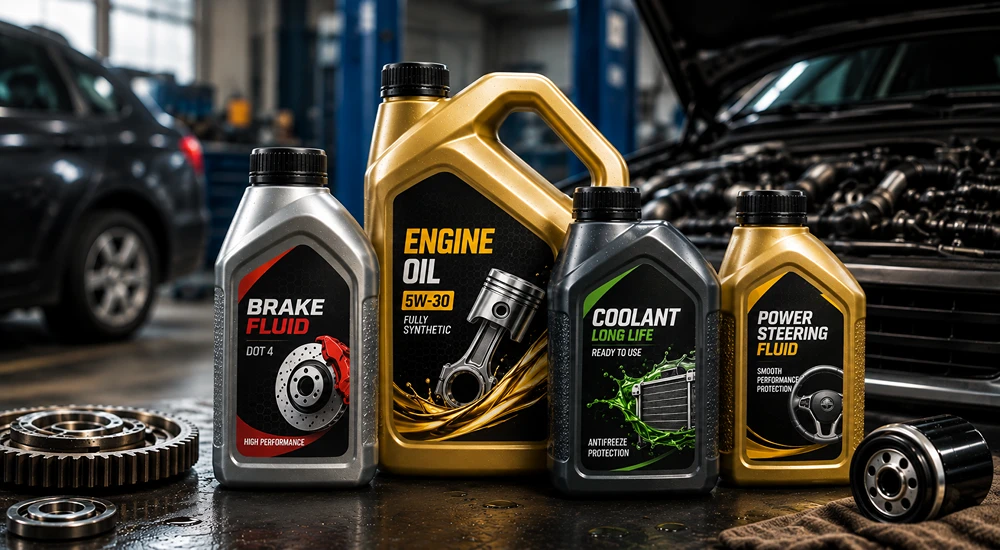
When it comes to automotive fluid packaging, the label does much more than display a product name or brand logo. It carries essential information such as usage instructions, safety warnings, batch numbers, manufacturing details, and regulatory information that users rely on throughout the product’s lifecycle.
Unlike many consumer products, automotive fluids are often stored, transported, and used in environments where labels are exposed to oil, grease, chemicals, moisture, UV rays, temperature fluctuations, and frequent handling. If a label fades, peels, or becomes unreadable, it can affect product safety, compliance, and customer confidence.
This is why choosing durable automotive fluid packaging labels is a critical decision for manufacturers of engine oils, lubricants, coolants, brake fluids, transmission fluids, and other automotive chemicals.
Why Label Durability Matters in Automotive Fluid Packaging
Automotive products are designed to perform under demanding conditions, and their packaging should do the same.
Labels must remain securely attached and clearly readable from production and transportation to warehouse storage and end-user application.
A durable label helps manufacturers:
- Protect important product information
- Maintain regulatory compliance
- Improve brand presentation
- Prevent misidentification of products
- Enhance customer trust
Whether products are displayed on retail shelves or supplied to workshops and industrial facilities, labels should continue to perform throughout the product’s shelf life.
Challenges Labels Face in Automotive Fluid Packaging
Automotive products encounter conditions that ordinary labels cannot withstand.
Some of the most common challenges include:
Chemical Exposure
Engine oils, lubricants, brake fluids, coolants, and solvents can come into direct contact with labels during filling, transportation, or use. Without chemical-resistant materials and adhesives, labels may smudge, discolor, or detach.
Oil and Grease
Automotive containers are frequently handled with oily or greasy hands. Labels should resist staining while maintaining excellent print clarity.
Moisture and Humidity
Products are often stored in warehouses, workshops, and outdoor environments where moisture levels fluctuate. Waterproof label materials help prevent lifting or bubbling.
Temperature Variations
Automotive products may experience extreme heat during transportation or freezing temperatures in storage. Labels must maintain strong adhesion across varying conditions.
Abrasion During Handling
Frequent movement, stacking, and transportation can cause scratches or surface damage. Durable labels resist abrasion and preserve important product information.
Key Features of High-Performance Automotive Fluid Packaging Labels
Choosing the right labeling solution involves more than selecting an attractive design.
High-quality automotive fluid packaging labels should provide:
Chemical Resistance
Labels should resist exposure to oils, lubricants, cleaning agents, and automotive chemicals without affecting print quality or adhesion.
Strong Adhesion
The adhesive should bond securely to containers made from HDPE, PET, metal, or other commonly used packaging materials.
Waterproof Performance
Moisture-resistant materials ensure labels remain intact even in humid storage conditions.
UV Resistance
Outdoor storage and transportation can expose products to sunlight. UV-resistant labels reduce fading and help preserve branding.
Scratch and Abrasion Resistance
Protective coatings improve durability during shipping, warehousing, and retail handling.
Excellent Print Quality
Clear printing improves readability of:
- Product information
- Batch numbers
- Expiry dates
- Safety instructions
- Hazard symbols
- QR codes
- Barcodes
Choosing the Right Label Type for Automotive Fluid Packaging
Different packaging formats require different labeling solutions.
| Packaging Requirement | Recommended Label Solution |
| Full bottle branding | Shrink Sleeve Labels |
| Curved containers | Shrink Sleeve Labels |
| Premium shelf appearance | Shrink Sleeve Labels |
| High-speed production | Pressure-Sensitive Labels |
| Long-lasting decoration | Heat Transfer Labels |
| Round bottles and containers | Wrap-Around Labels |
Selecting the appropriate label depends on container shape, filling process, environmental exposure, and branding objectives.
Industries That Benefit from Durable Automotive Packaging Labels
High-performance labels are suitable for various automotive and industrial products, including:
- Engine oils
- Lubricants
- Brake fluids
- Coolants
- Transmission fluids
- Hydraulic oils
- Greases
- Additives
- Cleaning chemicals
- Automotive maintenance products
How Durable Labels Improve Brand Performance
Quality labels contribute to much more than packaging aesthetics.
Manufacturers benefit through:
- Improved product identification
- Better shelf visibility
- Reduced label failures
- Enhanced regulatory compliance
- Greater customer confidence
- Consistent brand appearance
- Longer product shelf life
Reliable labels also minimize costly rework caused by damaged or unreadable packaging.
Factors to Consider Before Selecting Automotive Fluid Packaging Labels
Before finalizing a labeling solution, manufacturers should evaluate:
Packaging Material
Ensure compatibility with HDPE, PET, metal cans, or specialty containers.
Product Formulation
Consider whether the product contains oils, solvents, or aggressive chemicals that require enhanced resistance.
Storage Conditions
Assess exposure to sunlight, humidity, dust, and temperature changes.
Transportation Requirements
Packaging should withstand vibration, stacking, and long-distance logistics.
Printing Requirements
Determine if variable data, barcodes, QR codes, or multilingual information needs to be included.
Production Speed
Choose labels compatible with automated labeling equipment to improve operational efficiency.
Why the Right Label Is a Long-Term Investment
While packaging often focuses on container design, labels play an equally important role in protecting product information and supporting brand reputation.
A durable labeling solution helps manufacturers:
- Reduce packaging failures
- Improve operational efficiency
- Protect brand identity
- Deliver a better customer experience
- Support compliance requirements
- Maintain consistent product presentation
Investing in high-quality automotive fluid packaging labels can reduce replacement costs and improve long-term packaging performance.
Conclusion
In the automotive industry, packaging must perform as reliably as the products it protects. Choosing durable, chemical-resistant automotive fluid packaging labels ensures that critical product information remains clear and intact throughout manufacturing, transportation, storage, and end use. By selecting labels designed to withstand oils, chemicals, moisture, UV exposure, and frequent handling, manufacturers can improve product safety, strengthen brand credibility, and reduce packaging-related issues.
At Ideal Wrappers, we provide high-performance labeling solutions tailored to demanding industrial applications. Whether you need shrink sleeve labels, pressure-sensitive labels, heat transfer labels, or wrap-around labels for automotive fluid packaging, our solutions are engineered for durability, superior print quality, and reliable performance to help your products stand out while meeting the challenges of real-world use.
Frequently Asked Questions
Why are chemical-resistant labels important for automotive fluid packaging?
Chemical-resistant labels remain readable and securely attached even when exposed to engine oils, lubricants, brake fluids, coolants, and other automotive chemicals, ensuring product information stays intact.
What type of labels are best for automotive fluid packaging?
The ideal label depends on the container and application. Shrink sleeve labels, pressure-sensitive labels, heat transfer labels, and wrap-around labels are commonly used for automotive fluid packaging.
Which packaging materials are compatible with automotive fluid packaging labels?
High-quality labels can be applied to HDPE bottles, PET containers, metal cans, and other packaging materials commonly used for automotive fluids.
What features should automotive fluid packaging labels have?
They should offer chemical resistance, oil resistance, waterproof performance, UV resistance, abrasion resistance, strong adhesion, and high-quality print durability.
Which automotive products require durable packaging labels?
Engine oils, lubricants, brake fluids, coolants, transmission fluids, hydraulic oils, additives, greases, and automotive cleaning chemicals all benefit from durable labeling solutions.