
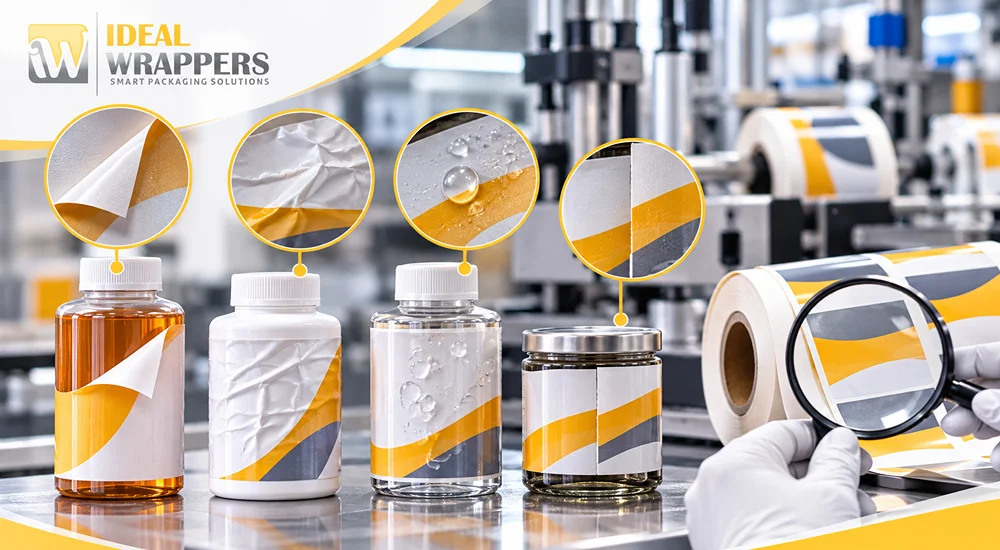
A label can look perfect when it leaves the printing facility but still develop problems during application, storage, transportation or everyday use. Labels may peel, fade, wrinkle or distort when the material, adhesive, printing process or packaging surface is not properly matched to the application.
Understanding these common label problems can help manufacturers identify the actual cause instead of simply replacing the label. The right combination of label material, adhesive, printing quality and application conditions is essential for creating packaging labels that remain functional and visually consistent.
Why Do Labels Peel Off?
Label peeling is one of the most common packaging label problems. It occurs when the adhesive does not create or maintain sufficient bonding with the packaging surface.
Common Causes of Label Peeling
Several factors can contribute to poor label adhesion:
- Incorrect adhesive for the packaging substrate
- Dust, oil or moisture on the container surface
- Uneven or textured packaging surfaces
- Incorrect application pressure
- Exposure to humidity or water
- Temperature variations during storage or transportation
- Insufficient curing or application conditions
Plastic packaging can be particularly challenging because different surfaces have different characteristics. A label designed for one substrate may not perform the same way on another.
How to Prevent Label Peeling
Start by identifying the packaging material and surface condition before selecting a label. Test adhesive performance on the actual container rather than relying only on laboratory or standard-condition results.
Manufacturers should also evaluate the conditions the package will encounter after labeling, including moisture, temperature changes, handling and transportation.
Why Do Labels Fade?
Fading affects both the appearance of packaging and the readability of important information. It can make branding look inconsistent and may reduce the visibility of text, graphics, barcodes or other printed elements.
Common Causes of Fading
Labels can fade because of:
- Prolonged UV or sunlight exposure
- Ink and printing-system limitations
- Chemical or solvent exposure
- Moisture and environmental conditions
- Inadequate protection for the intended application
- Extended storage or outdoor exposure
The required level of print durability depends on where and how the product is used. A label intended for indoor storage may have different requirements from packaging exposed to sunlight, moisture or chemicals.
How to Improve Label Print Durability
When fading is a concern, manufacturers should discuss the expected exposure conditions with their label supplier. Ink selection, printing technology, label material and protective finishes may all influence print performance.
Testing should reflect actual use conditions whenever possible. This is particularly important for products that may encounter UV exposure, chemicals, abrasion or moisture.
What Causes Label Distortion and Wrinkling?
Label distortion can appear as wrinkles, bubbles, stretching, lifting or uneven positioning. These problems can affect the overall appearance of packaging and may become more noticeable on curved or flexible containers.
Common Causes of Label Distortion
Some common causes include:
- Incorrect label dimensions
- Poor material selection
- Application to curved or irregular surfaces
- Excessive stretching during application
- Incorrect application pressure
- Temperature-related changes
- Mismatch between the label and packaging surface
The label needs to accommodate the physical characteristics of the container. A solution that performs well on a rigid, flat surface may require different specifications for flexible, curved or contoured packaging.
How to Prevent Common Packaging Label Problems
Preventing label problems starts before production. Instead of treating peeling, fading and distortion as isolated issues, manufacturers should evaluate the entire labeling process.
Match the Label to the Packaging Surface
Consider whether the container is made from plastic, glass, metal or another substrate. Surface texture, curvature and flexibility can influence label selection and adhesion.
Consider the Product Environment
Identify whether the finished package will encounter:
- Water or humidity
- Heat or cold
- Sunlight
- Chemicals or oils
- Frequent handling
- Abrasion
- Long-distance transportation
These conditions should influence the selection of label material, adhesive and printing specifications.
Test Before Full-Scale Production
Sample testing can identify potential failures before thousands of labels are produced. Evaluate adhesion, appearance, print quality and durability on the actual packaging.
Testing can also help determine whether a different labeling technology would be more suitable for the application.
When Should You Change Your Labeling Solution?
Repeated label failures may indicate that the problem is not simply a production defect. If labels consistently peel, fade or distort despite correct application, the existing combination of material, adhesive, printing process and packaging surface may not be appropriate.
For some applications, manufacturers may need to consider alternative technologies such as heat transfer labels, shrink sleeves or self-adhesive labels, depending on the container, product and performance requirements.
The objective should be to select a labeling solution based on the complete application rather than choosing a label solely on appearance or initial cost.
A Practical Label Quality Checklist
Before approving a packaging label, check:
Surface: Is the packaging clean and suitable for the selected label?
Adhesion: Does the adhesive remain secure under expected conditions?
Print: Are colours, text, graphics and codes sharp and consistent?
Durability: Can the label withstand expected moisture, chemicals, abrasion and handling?
Application: Does the label apply smoothly without wrinkles, bubbles or distortion?
Environment: Has the label been tested under realistic storage and transportation conditions?
A simple checklist can help identify label quality issues before they become recurring production problems.
Conclusion
Peeling, fading and distortion are among the most common label problems, but they often have identifiable causes. Adhesive selection, packaging-surface compatibility, printing quality, material choice and environmental exposure can all influence how a label performs throughout its lifecycle.
For manufacturers, the solution is not simply to choose a stronger adhesive or thicker material. The complete labeling application should be evaluated from the packaging substrate and product environment to printing and application conditions.
With decades of experience in packaging and printing, Ideal Wrappers provides labeling solutions including heat transfer labels, shrink sleeves and self-adhesive labels for different packaging applications. Understanding the specific cause of a label failure helps manufacturers select a solution that delivers the right balance of appearance, adhesion and durability.
Frequently Asked Questions
Why do labels peel off plastic containers?
Labels may peel from plastic containers when the adhesive is not suited to the substrate, the surface contains dust, oil or moisture, or the package is exposed to conditions that affect adhesion. Proper surface preparation, adhesive selection and application testing can help prevent peeling.
Why do printed labels fade?
Printed labels can fade due to prolonged UV exposure, moisture, chemicals, abrasion or limitations in the printing and ink system. The appropriate material and printing specifications should be selected according to the product’s expected environment.
How can I prevent label peeling?
Choose an adhesive and label material compatible with the packaging surface, ensure the container is clean and dry during application, and test adhesion under realistic storage and handling conditions.
What causes labels to wrinkle or distort?
Wrinkling and distortion can result from incorrect label dimensions, unsuitable material, curved or flexible packaging surfaces, application pressure or temperature changes. Matching the label construction to the container geometry can help improve application quality.
How do I choose the right label for my packaging?
Consider the packaging substrate, container shape, product environment, expected handling, moisture and chemical exposure, required print quality and application method. Testing different label constructions on the actual packaging can help identify the appropriate solution.
Can changing the label material solve recurring label problems?
It can, depending on the cause. Recurring problems may result from the interaction between the label material, adhesive, printing system, packaging surface and application conditions. A complete evaluation can help determine whether changing the material or switching to another labeling technology is appropriate.