
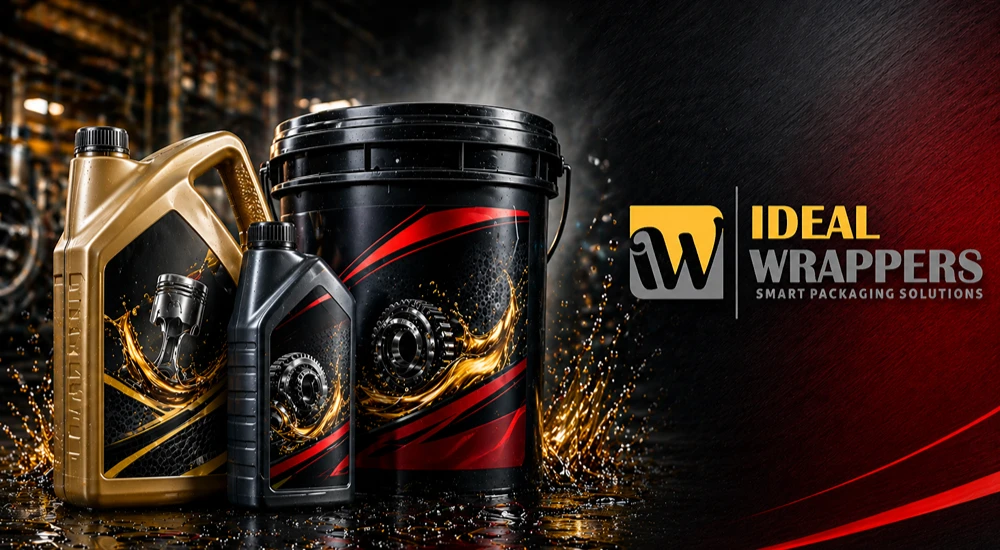
Lubricant and automotive fluid packaging is not just about storing the product, it’s about ensuring safety, durability, and clear communication throughout the product lifecycle. From engine oils to industrial lubricants, containers are often exposed to oil, heat, moisture, and rough handling. This makes choosing the right label for lubricant containers a critical decision for manufacturers.
In India’s competitive manufacturing landscape, brands are increasingly focusing on advanced lubricant container label India solutions that can deliver both performance and visual consistency. Whether it’s an industrial pail or a consumer-facing bottle, the right labeling solution can improve product identification, enhance branding, and ensure compliance.
Why Label Selection Matters in Lubricant Packaging
Labels on lubricant and automotive fluid containers serve multiple purposes. They provide product information, safety instructions, and branding, all while withstanding harsh conditions.
A poorly selected auto fluid label can lead to issues such as fading, peeling, or unreadable information. This not only affects product presentation but can also create safety risks and compliance challenges. On the other hand, a well-designed labeling solution ensures durability, readability, and long-term performance.
Key Factors to Consider When Choosing a Label
Selecting the right label requires evaluating several practical factors that directly impact packaging performance.
Container Material and Shape
Lubricant containers are typically made of plastic and come in various shapes, including bottles and large pails. The labeling method must be compatible with the container surface to ensure proper adhesion or bonding.
For example, a heat transfer label for lube pails works exceptionally well on plastic containers, providing a seamless finish that integrates with the surface. This ensures long-lasting labeling even under demanding conditions.
Exposure to Oil, Moisture, and Heat
Lubricant packaging is often exposed to oil spills, humidity, and temperature variations. Labels must be resistant to these environmental factors to maintain clarity and durability.
Using oil-resistant and moisture-resistant labeling solutions ensures that product details remain readable. This is especially important in industrial environments where containers are handled frequently.
Durability and Handling Conditions
Containers used in automotive and industrial sectors go through rough handling during transportation and storage. Labels must withstand abrasion, stacking pressure, and repeated handling.
Durable labeling technologies such as heat transfer labels offer strong resistance to scratches and wear, making them ideal for lubricant packaging.
Branding and Visual Appeal
While durability is important, branding cannot be ignored. Packaging plays a key role in influencing customer perception, especially in retail environments.
A well-designed lubricant container label India solution should combine functionality with aesthetics, ensuring that the product stands out while maintaining clarity of information.
Compliance and Information Clarity
Lubricant products often require detailed labeling, including usage instructions, safety warnings, and regulatory information. The label must provide enough space and print quality to display this information clearly.
High-resolution printing ensures that text, symbols, and barcodes remain readable throughout the product lifecycle.
Comparing Labeling Options for Lubricant Containers
Understanding different labeling technologies helps in selecting the most suitable option.
Heat Transfer Labels
Heat transfer labels are widely used for industrial packaging. They offer a seamless finish by bonding directly to the container surface.
Benefits:
- High durability and resistance to oil and moisture
- No peeling or lifting edges
- Long-lasting print quality
- Ideal for plastic pails and containers
A heat transfer label for lube pails is often considered the best option for heavy-duty applications due to its reliability and performance.
Shrink Sleeve Labels
Shrink sleeve labels provide full-body coverage and are suitable for complex container shapes.
Benefits:
- 360-degree branding
- High visual appeal
- Flexibility for different container designs
They are commonly used for consumer-facing lubricant products where branding is important.
Self-Adhesive Labels
Self-adhesive labels are a cost-effective option for certain applications.
Benefits:
- Easy to apply
- Suitable for flat or simple surfaces
- Flexible for short production runs
However, they may not offer the same level of durability as other labeling methods in harsh environments.
Choosing the Best Label for Lubricant Containers
There is no one-size-fits-all solution when it comes to selecting the right label. The decision depends on the product type, usage conditions, and branding requirements.
For industrial applications, heat transfer labeling is often the preferred choice due to its durability and seamless finish. For retail products, shrink sleeve labels provide strong visual appeal. Self-adhesive labels remain suitable for simpler or cost-sensitive applications.
By evaluating these factors, manufacturers can select the most effective label for lubricant containers that meets both functional and branding needs.
Conclusion
Choosing the right auto fluid label is essential for ensuring product durability, safety, and brand consistency. From environmental resistance to visual appeal, every aspect of labeling plays a role in packaging performance.
Ideal Wrappers offers advanced labeling solutions, including heat transfer labels, shrink sleeves, and wrap around labels, designed specifically for industrial and consumer packaging needs. With expertise in delivering reliable lubricant container label India solutions, Ideal Wrappers helps manufacturers achieve durable, efficient, and high-quality packaging across diverse applications.
Frequently Asked Questions
What is the best label for lubricant containers?
The best label for lubricant containers depends on usage conditions. Heat transfer labels are ideal for durability, while shrink sleeves are suitable for branding-focused applications.
Why are heat transfer labels used for lube pails?
Heat transfer labels provide strong adhesion, seamless finish, and resistance to oil and moisture, making them suitable for heavy-duty lubricant packaging.
What should a lubricant container label include?
A lubricant container label should include product details, usage instructions, safety warnings, batch information, and compliance-related information.
Are shrink sleeve labels suitable for automotive fluid containers?
Yes, shrink sleeve labels are suitable for automotive fluid containers, especially when branding and visual appeal are important.
How do I choose the right auto fluid label?
Consider factors such as container material, environmental exposure, durability, branding needs, and production volume when selecting an auto fluid label.