
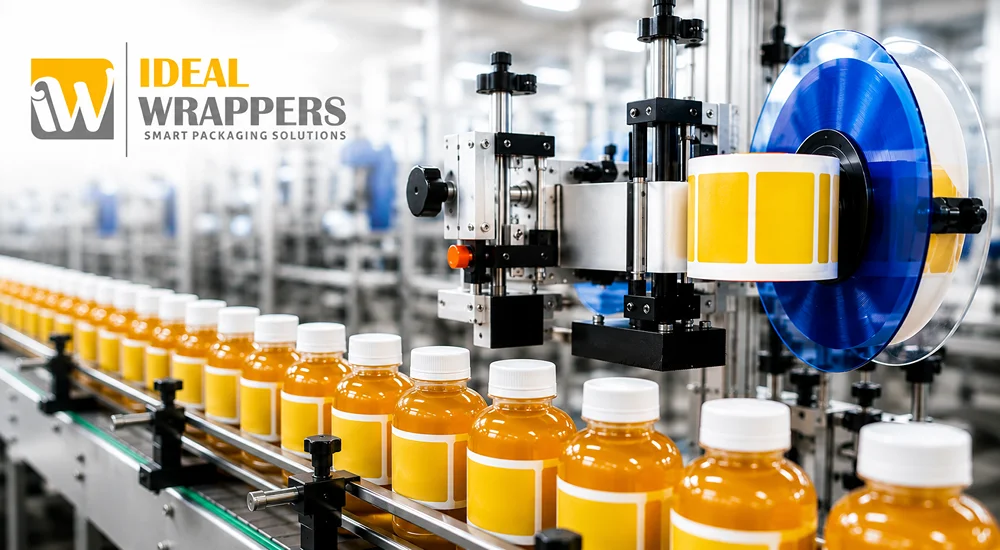
The stationery and consumer goods industries operate in highly competitive markets where speed, consistency, and packaging quality are essential. Manufacturers often process thousands of products every hour, making efficient labeling systems a critical component of modern production lines. Labels used in these industries must not only look appealing but also perform reliably under demanding manufacturing conditions.
As production capacities continue to increase, businesses are seeking labeling solutions that can keep pace without compromising quality. Advanced labeling technologies help manufacturers maintain efficiency while ensuring packaging remains attractive, informative, and durable. This has made high-performance labels an important element in today’s consumer goods packaging sector.
Why Labels Matter in High-Speed Production Environments
Packaging serves multiple functions beyond simply identifying a product. Labels communicate brand identity, product specifications, usage information, and regulatory details. In fast-moving manufacturing environments, labels must be capable of being applied accurately and consistently at high speeds.
Poor-quality labels can create several challenges, including misalignment, peeling, wrinkling, and print inconsistencies. These issues may interrupt production, increase material wastage, and affect overall packaging appearance.
For manufacturers involved in consumer goods packaging, selecting labels designed specifically for high-speed applications can significantly improve operational efficiency and reduce downtime.
Challenges of Labeling in High-Speed Manufacturing
As production lines become faster, packaging materials and labels are exposed to greater stress during application. Labels must maintain their integrity while moving rapidly through automated systems.
Some common challenges faced by manufacturers include:
- Label misalignment during application
- Adhesion problems on different container surfaces
- Inconsistent print quality across batches
- Damage caused by friction and handling
- Reduced efficiency due to label feeding issues
To overcome these challenges, companies require labeling solutions that combine durability, precision, and compatibility with automated packaging systems.
Key Features Labels Need for High-Speed Production
Strong Adhesion Performance
Labels used in automated production lines must adhere quickly and securely to containers. Poor adhesion can lead to lifting, peeling, or displacement during transportation and storage.
High-quality labeling materials help ensure labels remain firmly attached despite rapid application speeds and demanding handling conditions.
Excellent Print Consistency
Maintaining print clarity and color consistency is important for branding and product recognition.
Advanced printing technologies enable manufacturers to produce labels with sharp graphics, vibrant colors, clear barcodes, and uniform text reproduction. This helps maintain consistent packaging quality and strengthens brand visibility across high-volume production runs.
Consistent print quality supports brand credibility while helping products maintain a professional appearance.
Durability During Handling
Stationery and consumer goods products often pass through multiple stages before reaching end users. Labels should be able to withstand friction, stacking, and transportation without losing readability or visual appeal.
Durable labeling solutions contribute to better packaging performance and reduce the likelihood of product rejection.
Compatibility with Automated Systems
Labels designed for high-speed production should feed smoothly through automated equipment without causing interruptions.
Materials that offer dimensional stability and precise application characteristics help manufacturers maximize productivity while minimizing waste.
Labeling Technologies Supporting Consumer Goods Packaging
Several advanced labeling technologies are helping businesses improve efficiency in modern packaging operations.
Heat Transfer Labels
Heat transfer labels are widely used in applications where durability and seamless decoration are important.
These labels offer strong adhesion, excellent resistance to moisture, and long-lasting print durability while creating a smooth, seamless “no-label” appearance that enhances overall packaging aesthetics.
Heat transfer labels are particularly useful for products requiring attractive packaging and long-lasting graphics.
Wrap Around Labels
Wrap around labels provide an economical solution for cylindrical containers and products manufactured at high speeds.
They support efficient production processes while maintaining good print quality and branding consistency.
Shrink Sleeve Labels
Shrink sleeve labels have become increasingly popular because they provide full-body decoration and greater design flexibility.
These labels conform easily to containers with unique shapes and can help improve shelf visibility in competitive retail environments.
Importance of Label Quality in Stationery Packaging
Stationery products often rely heavily on packaging aesthetics to attract consumers. Labels used for notebooks, pens, art supplies, and office products must maintain a clean and professional appearance.
High-quality labels help stationery brands achieve:
- Better shelf presentation
- Improved brand recognition
- Enhanced product differentiation
- Consistent packaging quality
Reliable labeling also reduces production issues and contributes to smoother manufacturing operations.
How Labels Improve Consumer Goods Packaging Efficiency
Efficient packaging processes depend on materials that support continuous production.
Advanced labeling solutions help manufacturers:
Reduce Downtime
Labels that apply accurately and consistently minimize machine stoppages and production delays.
Increase Production Speed
Materials optimized for automated application allow businesses to maintain higher production rates.
Improve Packaging Consistency
Consistent label application ensures products maintain the same appearance regardless of production volume.
Lower Material Waste
Reliable labeling systems reduce rejected products and minimize unnecessary material consumption.
These benefits enable companies involved in consumer goods packaging to improve operational performance while maintaining packaging standards.
Future Trends in High-Speed Labeling
The packaging industry continues to evolve as manufacturers seek greater efficiency and flexibility.
Advanced packaging technologies continue to evolve as manufacturers seek greater efficiency and flexibility. Emerging trends such as smart labeling technologies, sustainable label materials, digital printing solutions, lightweight packaging designs, and enhanced automation systems are helping businesses improve productivity while meeting changing consumer and market expectations.
As production demands continue to increase, labels will play an even greater role in supporting manufacturing productivity and packaging innovation.
Choosing the Right Labeling Partner
Selecting a labeling partner with expertise in industrial packaging can help businesses optimize production efficiency and maintain packaging quality.
An experienced supplier should offer:
- Advanced printing technologies
- Customized labeling solutions
- Consistent quality control
- Reliable production capacity
- Technical support for packaging applications
Partnering with the right manufacturer allows brands to adapt more effectively to changing market requirements and production challenges.
Conclusion
Fast-paced manufacturing environments require labeling solutions that can perform consistently without compromising packaging quality. In the stationery and consumer goods sectors, labels contribute significantly to operational efficiency, product presentation, and brand recognition. Businesses that invest in durable and reliable labeling technologies are better positioned to meet increasing production demands while maintaining high packaging standards.
At Ideal Wrappers, we provide advanced labeling solutions designed to support modern consumer goods packaging applications. From heat transfer labels and shrink sleeves to wrap around labels, our expertise helps brands achieve efficient production, superior packaging aesthetics, and long-lasting label performance across diverse product categories.
Frequently Asked Questions
Why is label quality important in high-speed production?
High-quality labels help prevent misalignment, peeling, and production interruptions, ensuring smoother manufacturing operations.
Which labeling technology is best for consumer goods packaging?
The ideal technology depends on the product and packaging requirements, but heat transfer labels, shrink sleeves, and wrap around labels are commonly used.
How do labels improve production efficiency?
Reliable labels support faster application, reduce downtime, improve packaging consistency, and minimize material waste.
What challenges do manufacturers face with high-speed labeling?
Common challenges include poor adhesion, print inconsistencies, label feeding issues, and damage caused by rapid handling.
How can businesses choose the right labeling partner?
Companies should look for manufacturers with advanced technologies, strong quality control systems, scalable production capabilities, and industry-specific expertise.