
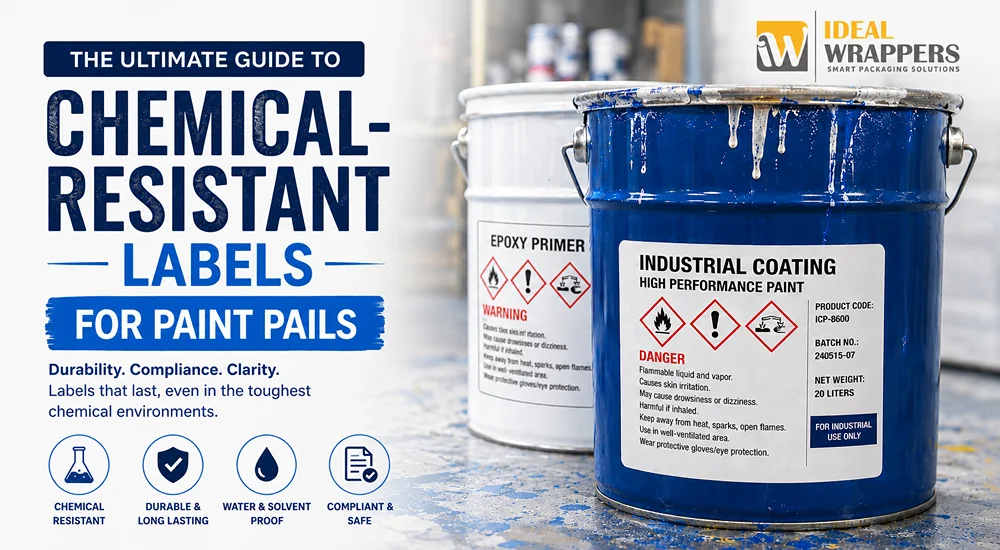
In industrial packaging, labels are expected to do much more than display a logo or product name. They carry essential information such as safety warnings, usage instructions, batch details, and branding elements. When it comes to paint packaging, labels face some of the harshest conditions in the manufacturing and supply chain process. This is why choosing the right label for a paint pail becomes extremely important.
Paint containers are often exposed to chemicals, moisture, rough handling, oil, and changing environmental conditions. Standard labels may peel, fade, or lose readability over time. Durable and chemical-resistant labeling solutions help ensure that product information remains intact throughout storage, transportation, and usage.
Why Paint Pails Need Specialized Labels
Paint products contain strong chemical compounds that can affect label durability if unsuitable materials are used. Industrial paint packaging also goes through demanding transportation and storage environments where containers are stacked, moved repeatedly, and exposed to moisture or dust.
Labels on a paint pail must remain:
- Readable
- Securely attached
- Resistant to chemical exposure
- Durable during handling
A damaged label can create safety risks, affect compliance, and reduce overall packaging quality. This is why manufacturers increasingly invest in industrial labeling solutions designed specifically for paint and chemical packaging applications.
Understanding Chemical Resistance in Labels
Chemical resistance refers to a label’s ability to withstand exposure to chemicals, oils, solvents, and harsh substances without losing adhesion, print clarity, or structural integrity.
In paint packaging, labels may come into contact with:
- Solvents
- Oil-based substances
- Cleaning chemicals
- Moisture and humidity
- Abrasion during transportation
Without proper resistance, labels may wrinkle, fade, crack, or peel away from the container surface.
High-quality labeling materials and advanced printing technologies help improve resistance against these challenges while maintaining consistent appearance and readability.
Key Factors That Help Labels Survive Paint Pail Conditions
Strong Adhesion Performance
One of the most important qualities of a durable paint label is strong adhesion. Labels should remain firmly attached even when containers are exposed to moisture, oil, or rough handling.
Industrial packaging often experiences continuous movement during logistics and storage. Strong bonding performance helps prevent peeling or lifting over time.
Advanced labeling technologies such as heat transfer labels provide seamless adhesion directly onto the container surface, improving durability in demanding environments.
Chemical Resistant Materials
Material selection plays a major role in determining label performance. Labels designed for industrial paint packaging use materials that resist:
- Chemical exposure
- Oil contact
- Moisture penetration
- Surface damage
Chemical resistant materials help maintain print quality and readability throughout the product lifecycle.
This becomes especially important in industrial applications where labels must survive long-term exposure to harsh substances.
Scratch and Abrasion Resistance
Paint containers often go through rough handling during transportation and warehousing. Labels may rub against other containers, machinery, or packaging surfaces.
Scratch-resistant labels help preserve branding, product details, and safety instructions despite repeated handling. Durable surface coatings and high-quality printing improve resistance against abrasion.
Moisture and Humidity Protection
Industrial storage conditions are not always controlled. Paint pails may be exposed to humid environments, water splashes, or condensation during transportation.
Moisture-resistant labels help prevent:
- Ink smudging
- Adhesion failure
- Material warping
- Print fading
Reliable moisture protection improves long-term packaging performance and keeps labels readable under challenging conditions.
Best Labeling Technologies for Paint Pails
Modern industrial packaging uses advanced labeling technologies that provide better durability and chemical resistance.
Heat Transfer Labels
Heat transfer labels are widely used for industrial containers because they bond directly onto the surface of the paint pail. These labels provide:
- Strong adhesion
- Seamless appearance
- Chemical resistance
- Long-lasting print durability
Heat transfer labeling also reduces the risk of peeling or edge lifting compared to traditional label methods.
Shrink Sleeve Labels
Shrink sleeve labels offer full-body branding and enhanced visual appeal while maintaining good durability. They work well for containers with unique shapes and provide more space for product information and branding.
These labels are commonly used when both durability and shelf visibility are important.
Wrap Around Labels
Wrap around labels are cost-effective and suitable for cylindrical containers. They are widely used in high-speed packaging operations and can perform well when combined with durable materials and quality adhesives.
Why Print Quality Matters in Paint Packaging
In industrial packaging, labels are not just decorative elements. They communicate critical information including:
- Safety instructions
- Product identification
- Batch information
- Application guidelines
- Compliance markings
Poor print quality can make labels difficult to read and affect customer confidence. Advanced printing technologies help maintain sharp graphics, color consistency, and long-lasting readability.
Consistent print quality also improves overall brand presentation in competitive industrial markets.
Choosing the Right Labeling Partner
Selecting the right labeling partner is essential for maintaining packaging durability and operational efficiency. A reliable supplier should provide:
- Durable labeling materials
- Advanced printing technologies
- Consistent quality control
- Industrial packaging expertise
- Scalable production capabilities
Manufacturers that understand industrial packaging requirements can recommend labeling solutions specifically designed for paint and chemical applications.
Conclusion
Paint packaging environments demand labels that can withstand chemical exposure, rough handling, moisture, and long transportation cycles. Choosing durable labeling solutions for a paint pail helps maintain product identification, compliance, and brand presentation even under challenging industrial conditions.
Ideal Wrappers provides advanced labeling solutions designed for industrial packaging applications requiring durability and high performance. With expertise in heat transfer labels, shrink sleeves, and chemical-resistant packaging technologies, Ideal Wrappers helps businesses achieve reliable label performance, consistent branding, and long-lasting packaging quality across paint and industrial product categories.
Frequently Asked Questions
Why do paint pails require chemical resistant labels?
Paint pails are exposed to chemicals, moisture, and rough handling, making chemical-resistant labels necessary for maintaining readability and durability.
What happens if labels are not chemical resistant?
Labels may peel, fade, crack, or lose adhesion when exposed to solvents, oils, and industrial handling conditions.
Which labeling technology is best for paint pails?
Heat transfer labels are widely preferred for paint pails because they provide strong adhesion, durability, and resistance to harsh industrial environments.
Why is moisture resistance important in paint packaging labels?
Moisture resistance helps prevent print fading, label peeling, and adhesion failure during storage and transportation.
How do durable labels improve industrial packaging?
Durable labels maintain product identification, safety information, and brand appearance throughout the product lifecycle.