
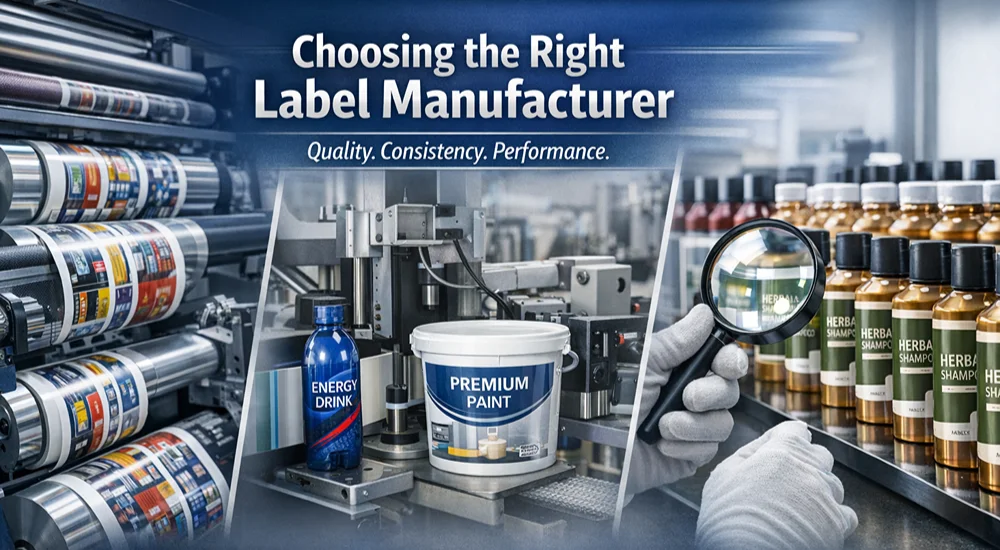
Packaging is no longer just about protecting a product, it plays a crucial role in branding, product identification, regulatory compliance, and customer trust. At the center of effective packaging lies the label. Whether a business is manufacturing consumer goods, industrial products, or household items, choosing the right label manufacturer can directly influence packaging performance and market perception.
Labels must withstand transportation, storage conditions, handling, and sometimes exposure to moisture or chemicals. They also need to display clear product information and maintain visual consistency across large production batches. With multiple labeling technologies and suppliers available in the market, selecting the right partner requires a thoughtful approach. This checklist will help manufacturers evaluate key factors before choosing a labeling provider and ensure that their packaging solutions support both functionality and brand value.
Understand Your Product and Packaging Requirements
Before selecting a label manufacturer, businesses should clearly define their product packaging needs. This includes evaluating the type of container material used such as plastic, glass, or metal and understanding how the product will be stored, transported, and used.
For example, plastic containers used in industrial packaging may require more durable labeling solutions compared to lightweight consumer packaging. Products exposed to moisture, temperature changes, or rough handling need labels that remain intact and readable throughout the supply chain.
Manufacturers should also consider the shape and size of the packaging. Cylindrical containers, curved surfaces, and irregular packaging designs may require different labeling technologies. Identifying these requirements early helps in choosing suitable labeling solutions that perform reliably in real-world conditions.
Evaluate Labeling Technologies Offered
Not all labeling methods are suitable for every type of packaging. A reliable label manufacturer should offer multiple technologies and recommend the most appropriate solution based on product requirements, container material, and production scale. Understanding different labeling options helps businesses choose packaging solutions that support durability, branding, and operational efficiency.
Heat Transfer Labels for Durable Plastic Packaging
Heat transfer labels are commonly used for plastic containers, industrial pails, and rigid packaging where long-lasting performance is important. This labeling method transfers printed graphics directly onto the container surface using heat and pressure, creating a seamless finish without visible edges. Because the label becomes part of the packaging surface, it offers strong resistance to moisture, scratches, and handling damage. This makes heat transfer labeling suitable for products that require reliable labeling solutions in demanding environments.
Shrink Sleeve Labels for Full-Body Branding
Shrink sleeve labels provide flexible packaging decoration by shrinking tightly around containers when heat is applied. This technology allows brands to use 360-degree design space, making it easier to display product information, instructions, and vibrant graphics. Shrink sleeves adapt well to containers of different shapes and sizes, which makes them a popular choice in industries such as beverages, personal care products, and household packaging. They also support improved shelf visibility and strong brand presentation.
Wrap Around Labels for Cost-Effective Production
For cylindrical packaging such as bottles and jars, wrap around labels offer a practical and cost-effective solution. These labels are applied around the container using adhesive and are compatible with high-speed automated labeling lines. Because of their efficiency and ease of application, wrap around labeling is widely used in large-scale production environments. This method provides sufficient space for branding and product details while supporting consistent packaging performance across high-volume manufacturing.
Check Manufacturing Experience and Industry Expertise
Experience is a key factor when evaluating potential label manufacturers. Companies with a strong background in handling diverse packaging requirements are better equipped to recommend suitable labeling methods and materials.
Different industries have unique packaging challenges. For example, paint and lubricant containers require labels that resist oil exposure and rough handling, while consumer goods packaging may prioritize design flexibility and shelf visibility.
Working with an experienced manufacturer ensures access to industrial labeling solutions that meet industry standards and perform consistently across production cycles. Expertise in handling complex packaging requirements also reduces the risk of labeling issues that could affect product quality or branding.
Assess Printing Quality and Material Selection
The visual impact of packaging largely depends on printing quality. Labels should display sharp graphics, vibrant colors, and clear product information. Poor printing quality can reduce brand credibility and make product details difficult to read.
Businesses should evaluate whether the manufacturer uses advanced printing technologies and high-quality materials. Options such as PETG and PVC films for shrink sleeves or specialized inks for heat transfer labeling can influence durability and appearance.
Reliable packaging solutions ensure that labels remain visually consistent even after extended storage or transportation. This is particularly important for products that travel long distances before reaching customers.
Consider Production Capacity and Scalability
Manufacturers producing products at scale must ensure that their labeling partner can handle bulk orders without compromising quality. Production capacity plays a significant role in maintaining consistent branding across large batches.
A dependable label manufacturer should have efficient production systems, automated processes, and quality control mechanisms in place. This ensures timely delivery and uniform label quality across thousands of units.
Scalability is also important for businesses planning to expand. Choosing a labeling partner capable of supporting future growth helps maintain continuity in packaging design and supply chain efficiency.
Look for Customization and Branding Support
Modern packaging is closely tied to brand identity. Labels must not only display product details but also communicate brand values and differentiate products in competitive markets.
Professional labeling solutions often include customization options such as material selection, printing finishes, and design flexibility. This allows businesses to create packaging that aligns with their brand strategy while ensuring durability.
Custom labeling can also support product segmentation and marketing campaigns. Whether launching a new product line or updating packaging design, working with a manufacturer that offers customization ensures greater creative control and consistency.
Verify Quality Control and Compliance Standards
Quality assurance is essential in labeling and packaging. Labels must meet regulatory requirements, especially in industries where product safety information and ingredient details are mandatory.
Manufacturers should verify whether the labeling partner follows structured quality control procedures. Testing methods that evaluate label adhesion, print durability, and resistance to environmental conditions help ensure reliable performance.
Compliance with industry standards is particularly important when working with an industrial label manufacturer, as packaging used in industrial environments must withstand demanding conditions while maintaining clear product identification.
Evaluate Logistics and Technical Support
Efficient logistics and technical support are often overlooked when selecting a labeling partner. However, timely delivery and consistent supply play a crucial role in maintaining production schedules.
Manufacturers should consider factors such as lead times, inventory management capabilities, and responsiveness to technical queries. A labeling partner that offers proactive support can help address packaging challenges and recommend improvements when needed.
Strong collaboration between packaging teams and label suppliers ensures smoother operations and reduces the risk of production delays.
Compare Multiple Label Manufacturers Before Finalizing
Selecting the right labeling partner should involve comparing multiple suppliers based on quality, technology capabilities, pricing, and long-term value. While cost is an important factor, businesses should also evaluate reliability and performance.
Choosing the cheapest option may lead to packaging issues that affect brand reputation and product usability. Instead, manufacturers should focus on finding a partner that offers balanced packaging solutions, combining durability, efficiency, and consistent quality.
Building a long-term relationship with a trusted labeling provider can improve supply chain stability and support continuous packaging innovation.
Conclusion
Choosing the right label manufacturer is a strategic decision that impacts packaging performance, brand visibility, and product reliability. By evaluating factors such as labeling technologies, manufacturing experience, printing quality, production capacity, and compliance standards, businesses can implement labeling solutions that support both operational efficiency and market competitiveness.
Ideal Wrappers supports manufacturers with advanced labeling technologies including heat transfer labels, shrink sleeve labels, and wrap around labels. With a focus on consistent quality and durable packaging solutions, Ideal Wrappers helps businesses across industries achieve reliable product identification and strong packaging presentation.
Frequently Asked Questions
What should I check before selecting a label manufacturer?
Businesses should evaluate packaging requirements, labeling technologies, printing quality, production capacity, and industry experience before choosing a labeling partner.
Why are labeling solutions important in packaging?
Labeling solutions help maintain clear product identification, enhance brand visibility, and ensure durability during transportation and storage.
Which labeling technologies are commonly used?
Common technologies include heat transfer labels, shrink sleeve labels, and wrap around labels, each suitable for different packaging needs.
How do I choose the right packaging solution for my product?
Consider the container material, environmental conditions, production scale, and branding requirements when selecting packaging solutions.
Do label manufacturers offer customization options?
Yes, many label manufacturers provide customized labeling solutions that support unique branding and packaging design requirements.