
In today’s competitive manufacturing environment, packaging plays a much bigger role than it did a decade ago. A product’s label is not just for identification anymore, it communicates brand identity, product information, durability, and trust. For manufacturers dealing with plastic containers, industrial pails, and consumer goods, choosing the right labeling technology can significantly impact product presentation and long-term performance.
This is where heat transfer labels have become an increasingly popular solution. Unlike traditional adhesive labels that may peel or wrinkle over time, heat transfer labeling creates a smooth, long-lasting finish that becomes part of the product surface itself. Many industries including paint manufacturing, lubricants, agriculture, stationery products, toys, and housewares use industrial heat transfer labels because they provide durability, consistent branding, and resistance to moisture and handling conditions.
In this guide, we’ll explore what heat transfer labels are, how heat transfer labeling works, their benefits for manufacturers, and why they are widely used in packaging today. Whether you are evaluating labeling options for plastic containers or looking for durable labeling solutions for industrial packaging, understanding this technology can help you make better decisions for your products.
Understanding Heat Transfer Labels
Heat transfer labels are a labeling technology in which printed graphics are transferred onto a container surface using a combination of heat and pressure. Instead of relying on adhesive materials like traditional labels, the ink layer is transferred directly from a film carrier onto the product packaging.
This process creates a permanent bond between the label graphics and the container surface, making the label appear seamless and integrated. Because of this direct transfer method, heat transfer labeling is often used for plastic containers and industrial packaging where durability and a professional appearance are important.
Many manufacturers prefer heat transfer labels for packaging because they eliminate the common problems associated with adhesive labels. Issues like peeling edges, bubbles, or label misalignment are minimized. The result is a clean and consistent label that maintains its appearance even after long storage periods or frequent handling.
Another advantage is that heat transfer labels for plastic containers allow brands to maintain a premium look across different shapes and sizes of packaging. Whether the container is cylindrical, curved, or irregularly shaped, the labeling process ensures that the graphics remain clear and evenly applied.
How Heat Transfer Labeling Works
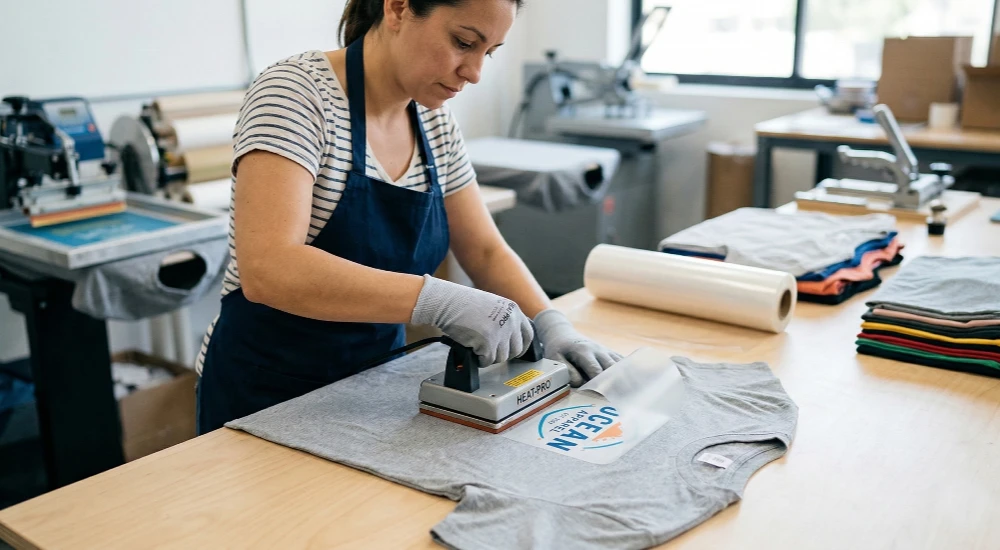
The heat transfer labeling process is designed to apply graphics directly onto containers using heat and pressure. Unlike traditional adhesive labels, this method transfers the printed design from a carrier film onto the packaging surface, creating a clean and long-lasting finish. Because the label becomes part of the container surface, manufacturers often choose this method for plastic containers and industrial packaging where durability and consistency are important.
The process typically involves three main steps, each ensuring that the label is transferred accurately and permanently onto the product.
Design and Printing
The first stage of the process begins with preparing the label artwork. The design, including brand graphics, colors, and product information, is printed onto a specialized transfer film using high-quality printing techniques. During heat transfer label printing, multiple layers of ink are applied to ensure the graphics remain clear and vibrant once transferred to the container surface.
This stage is important because the quality of printing directly affects the final appearance of the label. Manufacturers ensure that the design is precisely aligned with the size and shape of the container so that the transferred label looks smooth and professional.
Heat Application
Once the transfer film is prepared, it is placed onto the container where the label will be applied. Specialized labeling equipment then applies controlled heat and pressure to the film. This heat activates the ink layers, allowing them to detach from the film and move onto the surface of the container.
The heat transfer labeling process ensures that the graphics are evenly applied, even on curved or irregular packaging surfaces. Because the label is transferred through heat rather than adhesive, it helps avoid common issues such as bubbles, wrinkles, or peeling edges.
Permanent Bonding
In the final stage, the ink bonds directly with the packaging material, creating a durable and seamless label. Once the transfer is complete, the carrier film is removed, leaving only the printed graphics embedded on the container surface.
This permanent bonding makes heat transfer labels for plastic containers highly resistant to moisture, scratches, and abrasion. The result is a smooth and professional finish that maintains its appearance throughout storage, transportation, and product use.
Key Benefits of Heat Transfer Labels for Manufacturers
Manufacturers choose heat transfer labels for several practical and branding advantages. One of the most significant benefits is the seamless finish they provide. Since there are no visible label edges, the product looks cleaner and more professional compared to traditional adhesive labeling.
Durability is another major reason companies adopt heat transfer labeling. These labels can withstand exposure to water, oils, and rough handling during shipping or storage. This makes them ideal for industries where containers may be exposed to challenging conditions.
Another advantage is consistency. With heat transfer labels for manufacturers, large production runs can maintain the same label quality across thousands of containers. This helps brands maintain strong visual identity and ensures that product information remains readable throughout the supply chain.
Heat transfer labeling is also efficient for high-volume production. Because the labels are applied during manufacturing, the process can integrate seamlessly with automated packaging lines. For businesses producing large quantities of containers, this efficiency can reduce operational delays and improve packaging workflow.
Finally, heat transfer labels for containers provide excellent print clarity. High-resolution graphics, vibrant colors, and detailed designs can be transferred accurately onto packaging surfaces, making them ideal for products that rely on strong shelf presence.
Industries That Use Heat Transfer Labels
Many industries rely on heat transfer labels for packaging because of their durability and clean appearance. Different sectors use this labeling technology for various types of containers and products.
Paint Industry
Paint manufacturers often use heat transfer labels for paint pails because the containers are frequently stored in warehouses and handled during transportation. The durability of heat transfer labeling ensures that brand information and instructions remain intact.
Lubricant Industry
For automotive and industrial products, heat transfer labels for lubricant containers provide reliable labeling that resists oil exposure and handling during distribution. This ensures that product identification remains clear throughout its lifecycle.
Agriculture Products
In agriculture, chemical containers and fertilizer packaging require labels that can withstand storage conditions. Heat transfer labels for agriculture pails help maintain readable product information even in environments where moisture and dust are present.
Stationery and Toys
Manufacturers producing plastic stationery items and toy products often rely on heat transfer labels for stationery products and toys because they provide smooth decoration and long-lasting graphics. This is particularly useful for colorful product designs.
Housewares
Household products like storage containers and kitchen items also benefit from heat transfer labels for housewares. The labels maintain their appearance even after repeated use and cleaning.
Heat Transfer Labels vs Traditional Labels
Many manufacturers compare heat transfer labels vs pressure sensitive labels when deciding on packaging solutions. While adhesive labels are widely used, they may not always provide the same durability or visual consistency.
Adhesive labels rely on glue to stick to the packaging surface. Over time, this adhesive can weaken due to moisture, temperature changes, or handling. As a result, labels may peel or wrinkle.
In contrast, heat transfer labels do not rely on adhesives. Instead, the graphics are transferred directly onto the container surface through heat and pressure. This creates a stronger bond and reduces the risk of label damage.
Another difference is the visual finish. Heat transfer labeling produces a smooth appearance without edges, while traditional labels often have visible borders that can affect product aesthetics.
Because of these advantages, many manufacturers consider heat transfer labeling a better choice for plastic containers and industrial packaging.
Why Heat Transfer Labels Are Preferred in Modern Packaging
Modern packaging is expected to deliver both performance and visual appeal. Manufacturers must ensure that labels remain durable while also supporting brand recognition in competitive markets.
Heat transfer labels for plastic products offer a balance between durability and design flexibility. They allow brands to maintain high-quality graphics while ensuring that labels remain intact throughout distribution and use.
Another reason manufacturers choose this labeling technology is reliability. When containers are exposed to moisture, friction, or temperature changes, industrial heat transfer labels maintain their appearance better than many other labeling methods.
For businesses focused on large-scale production, heat transfer labeling also improves efficiency. The labeling process can be integrated into manufacturing lines, allowing consistent results across thousands of containers.
Choosing the Right Labeling Solution for Your Product
When selecting a labeling method, manufacturers should evaluate several factors. The first is the type of container material being used. Heat transfer labels for plastic containers work particularly well because the transfer process bonds effectively with plastic surfaces.
The second factor is the environment in which the product will be stored or transported. Products exposed to moisture, chemicals, or rough handling may require durable labeling solutions like heat transfer labels.
Production volume is another important consideration. Businesses producing large numbers of containers may benefit from the efficiency of heat transfer label printing because it supports consistent labeling across high production runs.
Ultimately, choosing the right labeling solution helps manufacturers maintain product quality, protect brand identity, and ensure that product information remains clear for consumers.
Conclusion
Heat transfer labels have become a reliable choice for manufacturers looking for durable, high-quality labeling solutions that enhance both product appearance and long-term performance. Their seamless finish, strong resistance to moisture and handling, and ability to maintain clear branding make them ideal for a wide range of packaging applications. From plastic containers to industrial pails, heat transfer labeling helps ensure that product information and brand identity remain consistent throughout the product lifecycle.
For businesses seeking dependable heat transfer labels for packaging and containers, Ideal Wrappers offers specialized solutions designed to meet the needs of modern manufacturing. With expertise in industrial heat transfer labels for paint pails, lubricant containers, agriculture packaging, stationery products, toys, and housewares, the company provides labeling technologies that combine durability, precision, and professional product presentation.
Frequently Asked Questions (FAQs)
What are heat transfer labels used for?
Heat transfer labels are used to apply printed graphics onto containers using heat and pressure. They are commonly used in packaging for paint pails, lubricant containers, agriculture products, toys, stationery items, and housewares.
How do heat transfer labels work?
Heat transfer labeling works by printing the design on a transfer film and applying it to the container with heat and pressure. The ink bonds with the container surface, creating a durable and seamless label.
Are heat transfer labels durable?
Yes. Industrial heat transfer labels are known for their resistance to moisture, scratches, and abrasion. Because the label integrates with the container surface, it is less likely to peel or fade compared to adhesive labels.
What industries use heat transfer labels?
Many industries use heat transfer labeling, including paint manufacturing, lubricants, agriculture packaging, stationery products, toys, and housewares.
Are heat transfer labels suitable for plastic containers?
Yes. Heat transfer labels for plastic containers are widely used because the transfer process bonds effectively with plastic surfaces, creating a long-lasting and smooth label finish.