
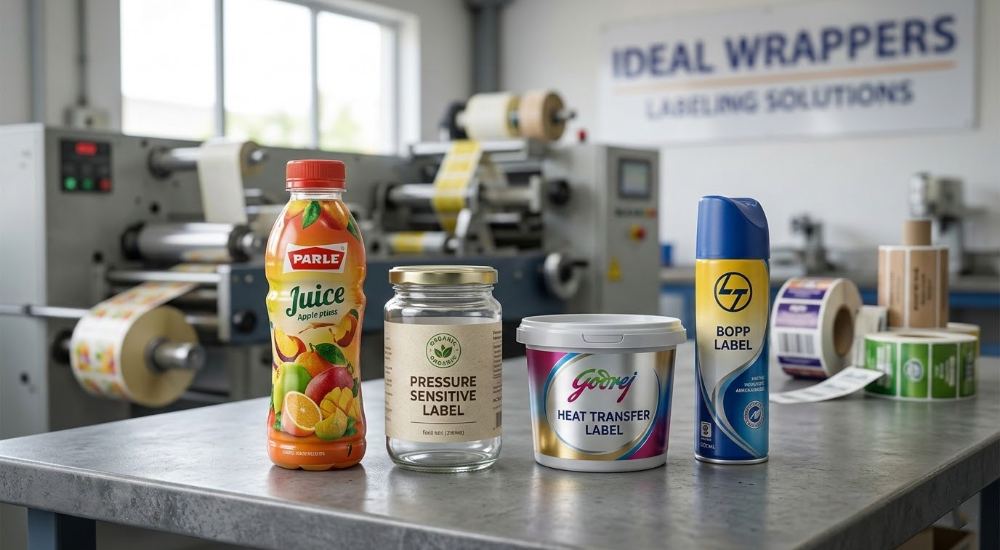
When customers look at a product on a store shelf or in a warehouse, the first thing they notice is the packaging. But beyond the container itself, the label plays a major role in how the product is identified, understood, and trusted. Labels communicate important information such as brand identity, product details, safety instructions, and usage guidelines. For manufacturers, choosing the right labeling solutions is therefore a critical part of product packaging.
However, selecting the right labeling method is not always straightforward. Different industries require different packaging solutions, and the type of label used must match the packaging material, the product environment, and the durability requirements. From plastic containers and industrial pails to bottles and household products, manufacturers must ensure that the labeling method supports both functionality and visual presentation.
Today, companies have access to multiple industrial labeling solutions such as heat transfer labels, shrink sleeve labels, and wrap around labels. Each method offers its own advantages depending on the product type and packaging design. Understanding how these labeling technologies work can help manufacturers make informed decisions that improve product appearance, durability, and overall packaging efficiency.
In this guide, we will explore how businesses can choose the right labeling solutions for packaging, the key factors to consider, and the different labeling technologies available for modern manufacturing.
Why Choosing the Right Labeling Solution Matters
The labeling method you choose can significantly influence the performance and perception of your product. A well-designed label ensures that the product information remains clear and visible while maintaining the brand’s identity. On the other hand, poor labeling can lead to issues such as peeling, fading, or unreadable product information.
For manufacturers, reliable labeling solutions ensure that the packaging performs well throughout the product’s lifecycle. Products often travel long distances before reaching consumers. During this time, containers may be exposed to moisture, friction, temperature changes, and rough handling. A durable labeling system ensures that the label remains intact and readable under these conditions.
Another reason why labeling matters is branding. In competitive markets, packaging must stand out while maintaining a professional appearance. High-quality packaging solutions support brand recognition and make products more appealing to customers. Labels with vibrant graphics, consistent printing quality, and long-lasting durability contribute to a positive brand impression.
Finally, regulatory compliance is another important factor. Many industries require labels to display safety instructions, manufacturing details, and product information clearly. Choosing the right industrial labeling solutions helps ensure that this information remains visible throughout the product’s use.
Key Factors to Consider When Choosing Labeling Solutions
Before selecting a labeling technology, manufacturers should evaluate several practical factors. The right labeling solutions for packaging depend on the type of container, product usage conditions, and production scale.
Packaging Material
One of the most important considerations is the type of packaging material used. Different materials interact differently with labeling methods. For example, plastic containers often work well with heat transfer labels, which bond directly with the container surface. Bottles and flexible containers may benefit from shrink sleeve labels, which provide full coverage around the container.
When selecting labeling solutions, manufacturers should consider whether the packaging material is plastic, metal, glass, or flexible packaging. Matching the labeling technology with the material ensures better adhesion and durability.
Product Environment
The environment in which the product will be stored or used also affects the choice of labeling solutions. Some products are exposed to moisture, oil, chemicals, or temperature changes. In such cases, manufacturers require durable labeling solutions that can withstand these conditions without fading or peeling.
For example, industrial packaging such as paint or lubricant containers requires labels that remain readable even after repeated handling. Choosing the right labeling technology helps ensure that product information remains intact throughout transportation and usage.
Production Volume
Production scale also influences the type of labeling technology used. Large-scale manufacturing often requires labeling methods that integrate smoothly with automated packaging lines. Efficient packaging solutions help maintain consistency across thousands of containers while reducing operational delays.
Manufacturers producing high volumes of containers often choose labeling methods that allow quick application and consistent print quality. This ensures that branding remains uniform across all products.
Branding and Design Requirements
Another important factor is visual presentation. Packaging is often the first point of interaction between the product and the customer. Labels must therefore support high-quality printing and clear graphics.
Modern labeling solutions allow brands to display vibrant colors, detailed graphics, and product information effectively. Manufacturers should choose labeling methods that align with their branding goals while maintaining durability and readability.
Types of Labeling Solutions Used in Packaging
Several labeling technologies are widely used across industries. Each method offers unique advantages depending on the packaging requirements.
Heat Transfer Labels
Heat transfer labels are widely used in industrial packaging because they create a seamless and durable finish. In this process, graphics are transferred from a printed film onto the container using heat and pressure. The ink bonds directly with the container surface, creating a label that appears integrated with the packaging.
This method is commonly used for plastic containers, industrial pails, and household products. Because the label becomes part of the container surface, it provides excellent resistance to moisture, scratches, and abrasion. Many manufacturers choose heat transfer labeling when they need long-lasting and professional-looking labels.
Shrink Sleeve Labels
Shrink sleeve labels are another popular option for modern packaging. These labels are printed on a flexible film that shrinks around the container when heat is applied. The label conforms to the shape of the container, providing full-body decoration and strong visual impact.
Shrink sleeves are often used for beverage bottles, cosmetic packaging, and consumer goods. They allow brands to use more design space and create visually appealing packaging. Because the label covers the entire container, shrink sleeve labeling can enhance product visibility on store shelves.
Wrap Around Labels
Wrap around labels are commonly used for cylindrical containers such as bottles and jars. In this method, the label is wrapped around the container and secured with adhesive.
This labeling technology is widely used in beverage and food packaging because it is cost-effective and suitable for high-speed production lines. Wrap around labels provide reliable branding while maintaining efficiency in large-scale manufacturing.
Industry Applications of Labeling Solutions
Different industries rely on specialized industrial labeling solutions to meet their packaging needs. For example, the paint industry often uses durable labels for large pails and containers that are handled frequently during transportation and storage.
The lubricant and chemical industries require labeling solutions that resist exposure to oils and chemicals. Clear labeling ensures that safety instructions and product details remain visible.
Agriculture products such as fertilizers and pesticides also require durable packaging solutions. Labels must withstand outdoor conditions and rough handling during distribution.
Consumer product industries such as stationery, toys, and housewares use labeling solutions that provide attractive graphics and consistent branding. In these sectors, labels must combine durability with visual appeal to enhance product presentation.
Common Labeling Mistakes Manufacturers Should Avoid
While choosing labeling solutions, manufacturers should avoid certain common mistakes. One mistake is selecting labels that are incompatible with the packaging material. Labels that do not bond properly may peel or wrinkle over time.
Another mistake is ignoring environmental conditions. Products exposed to moisture or chemicals require durable labeling solutions that can withstand these conditions.
Poor printing quality is another issue that can affect brand perception. Low-quality labels may fade or become unreadable, which can impact product credibility.
Manufacturers should also consider production efficiency. Choosing labeling technologies that integrate with production lines helps maintain consistency and reduce operational delays.
Working with the Right Label Manufacturer
Choosing the right labeling technology is important, but working with an experienced manufacturer is equally essential. A reliable label manufacturer can provide customized labeling solutions that match the specific requirements of different industries.
Experienced manufacturers understand the technical aspects of packaging materials, printing technologies, and durability requirements. They can recommend suitable packaging solutions based on the product type and production scale.
Quality control is another important factor. A reputable labeling partner ensures consistent printing quality, accurate color reproduction, and reliable label performance. This helps manufacturers maintain strong brand identity across all products.
Conclusion
The right labeling solutions play a crucial role in ensuring that product packaging remains durable, informative, and visually appealing. Effective labeling helps maintain clear product identification, strengthens brand recognition, and ensures that essential information stays visible throughout storage, transportation, and regular use. By evaluating factors such as packaging material, environmental exposure, and production requirements, manufacturers can implement packaging solutions that support both functionality and brand consistency.
Ideal Wrappers provides advanced industrial labeling solutions designed to meet the needs of modern manufacturing. With expertise in technologies such as heat transfer labels, shrink sleeve labels, and wrap around labels, the company supports a wide range of industries including paint, lubricants, agriculture, stationery, toys, and housewares. Their focus on precision manufacturing and consistent quality helps brands achieve durable packaging and strong product presentation.
Frequently Asked Questions (FAQs)
What are labeling solutions in packaging?
Labeling solutions refer to the methods and technologies used to apply labels to products and packaging. These solutions help display product information, branding, and safety instructions on containers.
What are the common types of labeling solutions?
Some of the most common labeling solutions include heat transfer labels, shrink sleeve labels, and wrap around labels. Each method offers different benefits depending on the packaging material and product type.
How do manufacturers choose the right packaging solutions?
Manufacturers evaluate factors such as packaging material, product environment, durability requirements, and production volume when selecting packaging solutions.
Why are durable labeling solutions important?
Durable labeling solutions ensure that labels remain intact and readable throughout transportation, storage, and product use. This helps maintain product identification and brand visibility.
Which industries use industrial labeling solutions?
Industrial labeling solutions are widely used in industries such as paint, lubricants, agriculture, beverages, stationery products, toys, and housewares.